
All parents are advocates. We advocate for our children’s medical care, education, and wellbeing. We are their voice until they can be their own, and even then, we stay close by, ready with our sage advice.
Having a medically complex child, or one with support needs, often feels like parenting from the passenger seat. Your instincts take a back seat to “best practice” or “evidence-based” advice from professionals. Most of these people mean well, but it’s important to remember that you are the expert on your child. It’s your job to be their advocate.
When Max was born, he went straight into the ICU, surrounded by medical professionals. I was there for comfort and consent, but mostly, I was being led. I believed they knew best, and in many ways, they did. But I felt redundant. Over time, as I bonded with Max and understood his needs, I became more confident in making decisions for him. Doctors know medicine, but I know my son. My role wasn’t just to follow but to make informed choices together.
The real challenge began when I had to advocate for my autistic and ADHD kids. There is still so much stigma and misunderstanding. Too often, people assume behavioural concerns are due to bad parenting, a lack of discipline or being spoilt, rather than a complex neurodevelopmental condition. There’s hesitation around medications that can genuinely transform lives. It can feel like you’re really up against it.
Nothing hurts more than watching your child miss out because systems aren’t built to include them. It’s frustrating and deeply unfair. But I remind myself that everything I’m doing is for them. I’m not being difficult; I’m being their voice. I stay kind and open, even when others aren’t.
When I think of advocates, I imagine brave people who stand strong in the face of injustice. The truth is, we can be incredible advocates and still cry in the car after a school meeting.
I’ve never liked conflict or ruffling feathers, but parenting has pushed me to stand firm for the inclusion and understanding my kids deserve.

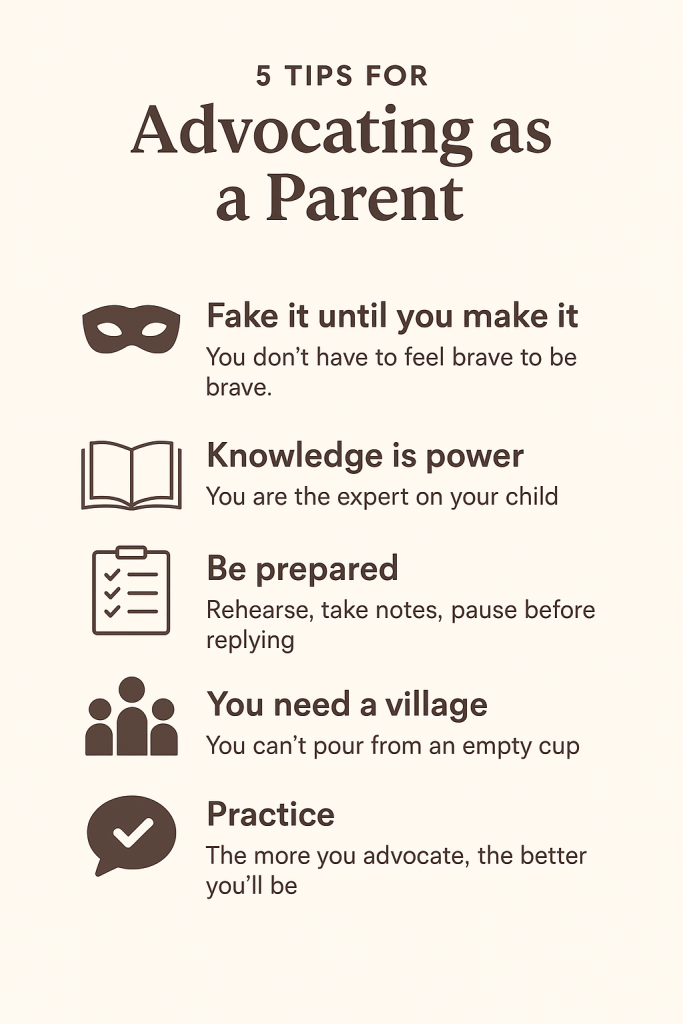
Image: Advocacy affirmation for parents.
Fake it until you make it
It might sound strange in the neurodivergent space, where we encourage authenticity over masking, but sometimes pretending to be calm and confident is a survival skill. When things feel hard, put on your strong, composed persona. You can fall apart later if you need to.
Knowledge is power
You’ll often find yourself advocating to professionals who are qualified and experienced, but no one knows your child like you do. Arm yourself with information. Research what supports are available. Join parent groups and ask questions. The more you know, the more empowered you’ll feel.
Be prepared
Practise what you want to say. Rehearse in the car, jot down notes, and don’t reply to upsetting emails straight away. Give yourself time to calm down before responding.
You need a village
Raising a child with support needs can be isolating, but you can’t pour from an empty cup. Stay connected with supportive friends and family. Join online groups or local networks. Reach out to carer support organisations, and don’t hesitate to access mental health support. Studies consistently show that parents of autistic children have significantly higher levels of stress – it’s okay to ask for help!
Good providers will check in on you too. And if you need extra help, your child’s NDIS case manager (usually a state services such as Kudos) can often assist with carer respite or support services.
Being an advocate is a learned skill. It gets easier with time. Remember that you’re not being difficult. You’re standing up for your child, and they should never have to shrink to fit in.

 The Adjusted Life
Leave a comment